Coming soon: drunk painting

IMG_3337Look what’s coming to Fifth Avenue in Park Slope! Soon we’ll be able to get sloshed while daubing paint on canvas somewhere other than in the privacy of our own homes.
I was unfamiliar with this franchise concept, but on reflection, its appeal to frazzled moms who feel their creativity is being stifled makes it a natural for the neighborhood.

Thank god we still have Leopoldi Hardware and Save-on-Fifth for the rest of us.

Brooklyn’s hot moms wish you a happy Mother’s Day

el castillo motherThe folk artist(s) who decorated Fifth Avenue storefronts for Valentine’s Day is back at it. There’s slightly less demand for his or her services for Mother’s Day (forcing me to ask: what’s wrong with you, Fifth Avenue business owners??), but there are still plenty of voluptuous moms in the South Slope and Sunset Park to remind you that Sunday is their day.

A gallery follows. Continue reading

Presidential apartments

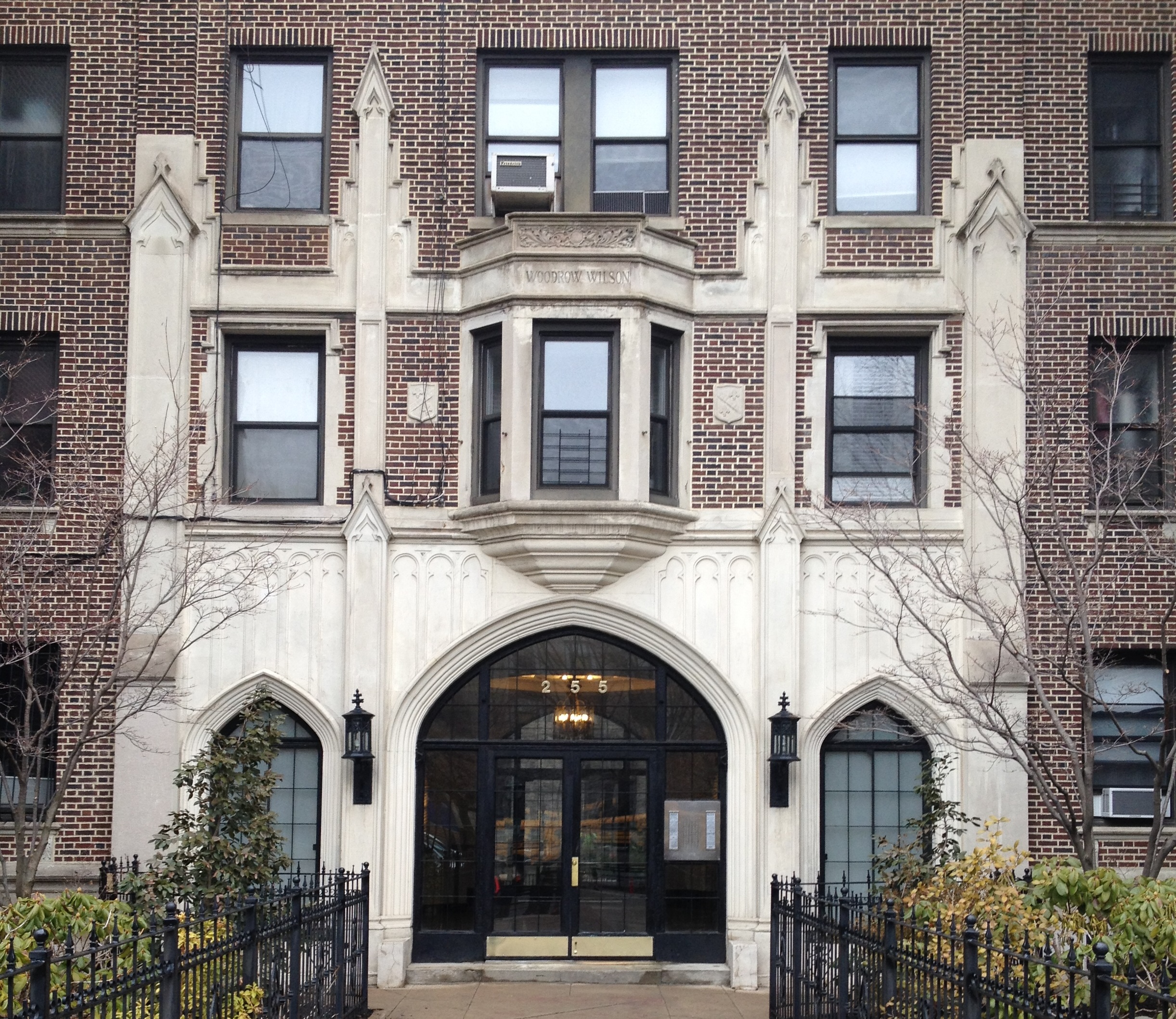
The Woodrow Wilson

The Woodrow Wilson

Brooklyn’s Eastern Parkway is notable for a number of reasons. It is the world’s first “parkway” (the word was coined to describe it), designed by the prolific Frederick Law Olmsted and Calvert Vaux and constructed in the 1870s as part of a grand vision – never achieved – to link Brooklyn’s Prospect Park and other green spaces together via a network of tree-lined, Parisian-style boulevards.  From its source at the magnificent (if terrifying for pedestrians) Grand Army Plaza, the parkway flows past the main branch of the Brooklyn Public Library, the Brooklyn Botanic Garden, the Brooklyn Museum and the Brooklyn Children’s Museum before it takes a dog-leg and turns into a much more workaday artery (less like Paris, more like Buffalo) at Ralph Avenue.

Come Labor Day weekend, the parkway will be transformed into an ear-splitting, bejeweled, befeathered and beflagged West Indian carnival. (Summertime in Brooklyn is bracketed by two festive excuses for public semi-nudity, June’s Mermaid Parade in Coney Island being the other one.)

Eastern Parkway is a fun street to run because the two malls that parallel the main traffic lanes, originally intended for horses and carriages, are now given over to pedestrians and cyclists (who seem less crazy here than in many other parts of the borough).  You can run long, uninterrupted, relatively uncongested blocks between avenues while taking in the view. Continue reading

Hipster business names

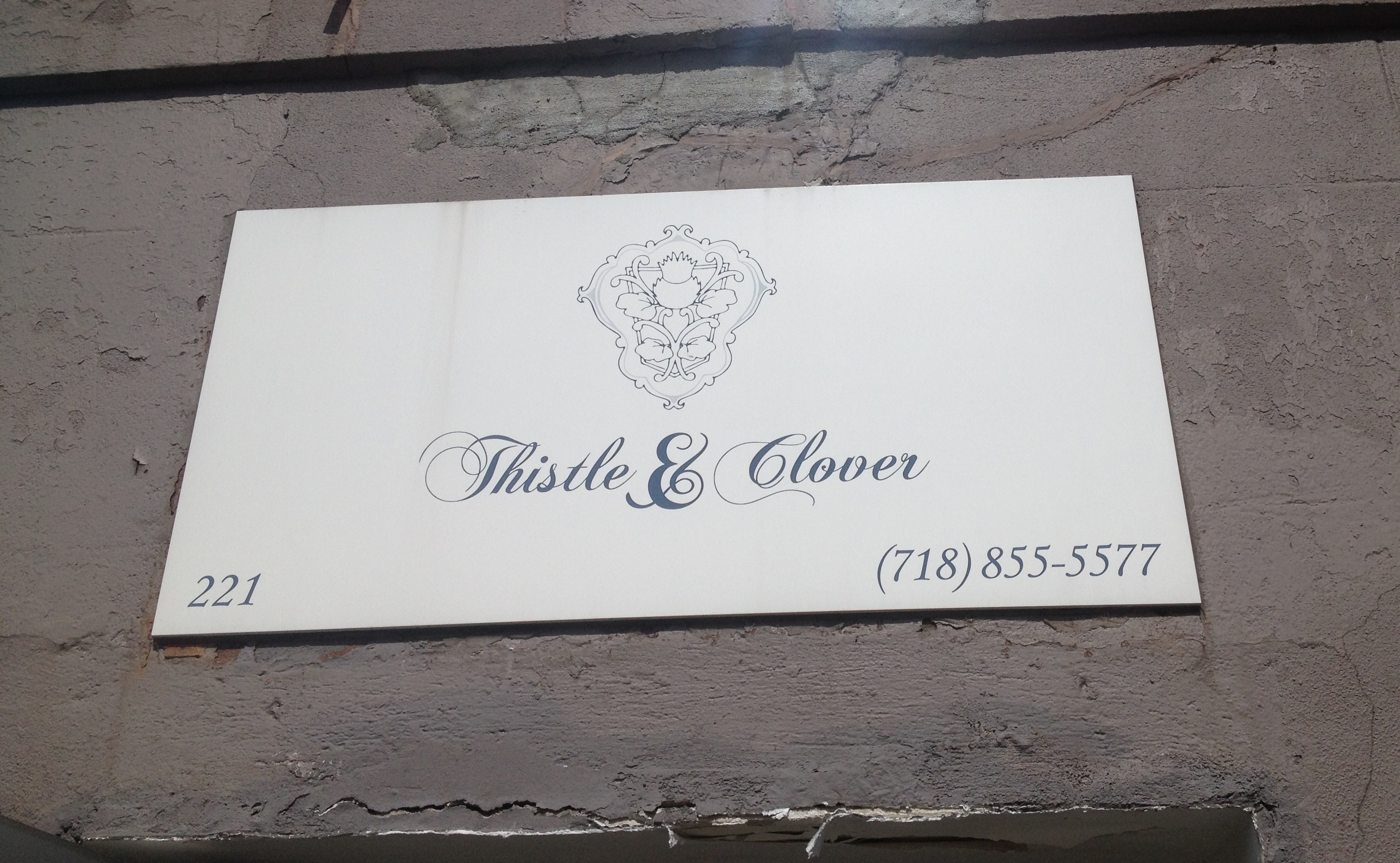
thistle and clover

Fort Greene

A few months back, someone sent me a “hipster business name generator” that  randomly creates quirky names like “Mortar & Smoke,” “Bath & Sandstone,” “Coil & Death,” and so on.

As these examples make clear, a good hipster business name does not blurt out the nature of the business. To give a counterexample: although it includes two nouns linked by an ampersand, “KC Tasty Deli & Grill” down the street is decidedly not a hipster business. Hipster business names whisper and wink.  It’s acceptable to hint at what goes on inside, so long as the reference is obscure, archaic, or both (I’m looking at you, Runner & Stone, with love). Ideally, one or both nouns give off a musty whiff of 19th century London.  And while ampersands do look superior on logos, spelling out the word “and” is (barely) permitted. You may substitute a plus sign if your establishment’s esthetic is more mid-century modern than steampunk.

This first-ever Not another Brooklyn blog quiz invites you to match wits with local hipster entrepreneurs. Most of the names are taken from establishments spotted on runs around Brooklyn (specifically, Park Slope and points north) and lower Manhattan. (I did cheat a little by looking up other examples on Yelp to round out the list to an even 20. The alternative was a long run to Williamsburg, and I just wasn’t up to it.) Continue reading

Happy Valentine’s Day from Brooklyn

cupid crop

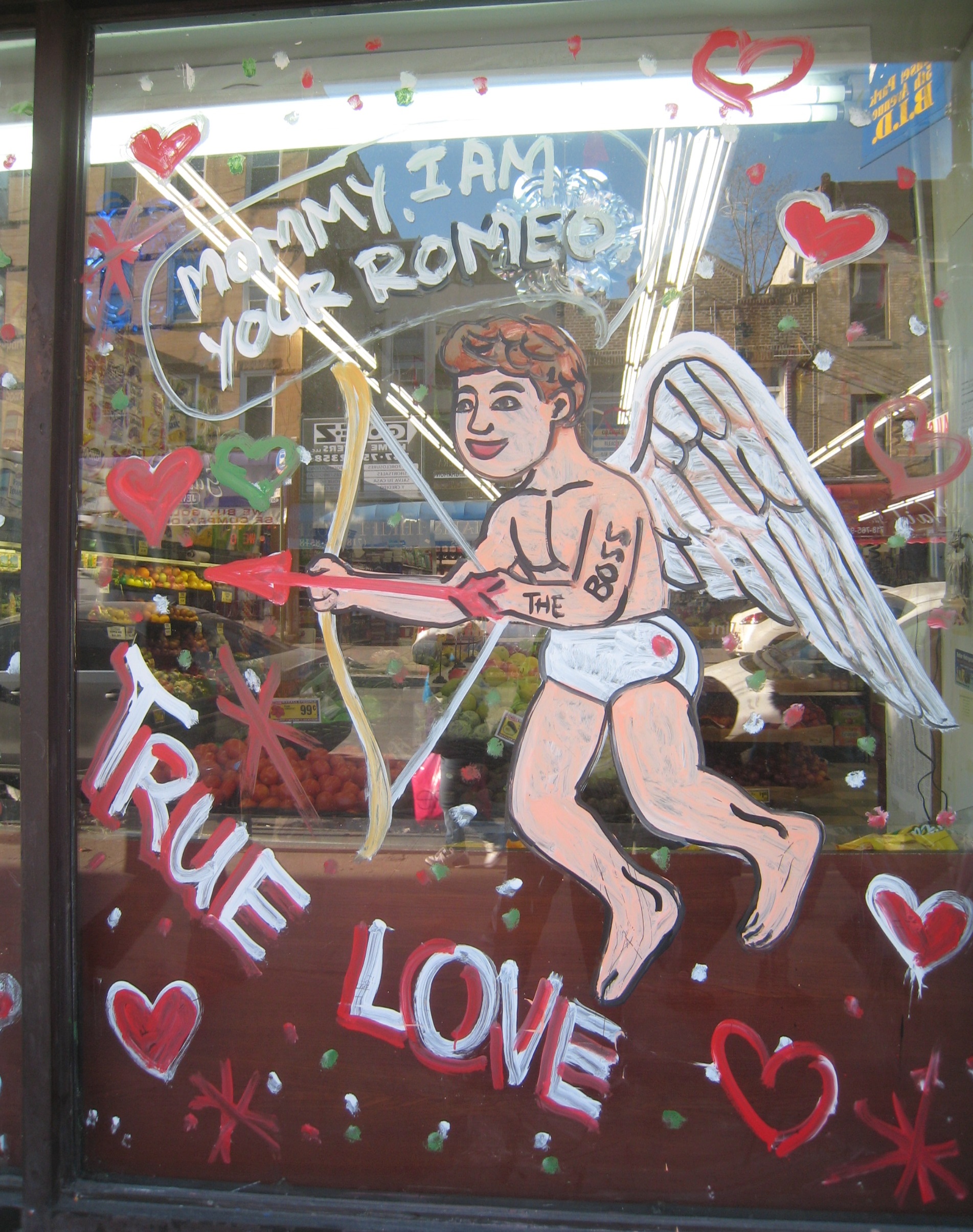
After yesterday’s text-heavy post, just pictures today. All of these images are from storefronts on 4th and 5th avenues . . . mainly in Sunset Park, but extending as far north as 4th ave and President street. I don’t know if they’re the work of the same artist, or if, over the years, certain conventions have become standard (androgynous couples embracing, Cupid in tighty-whities).

Whichever: enjoy! Continue reading

The banks were made of marble

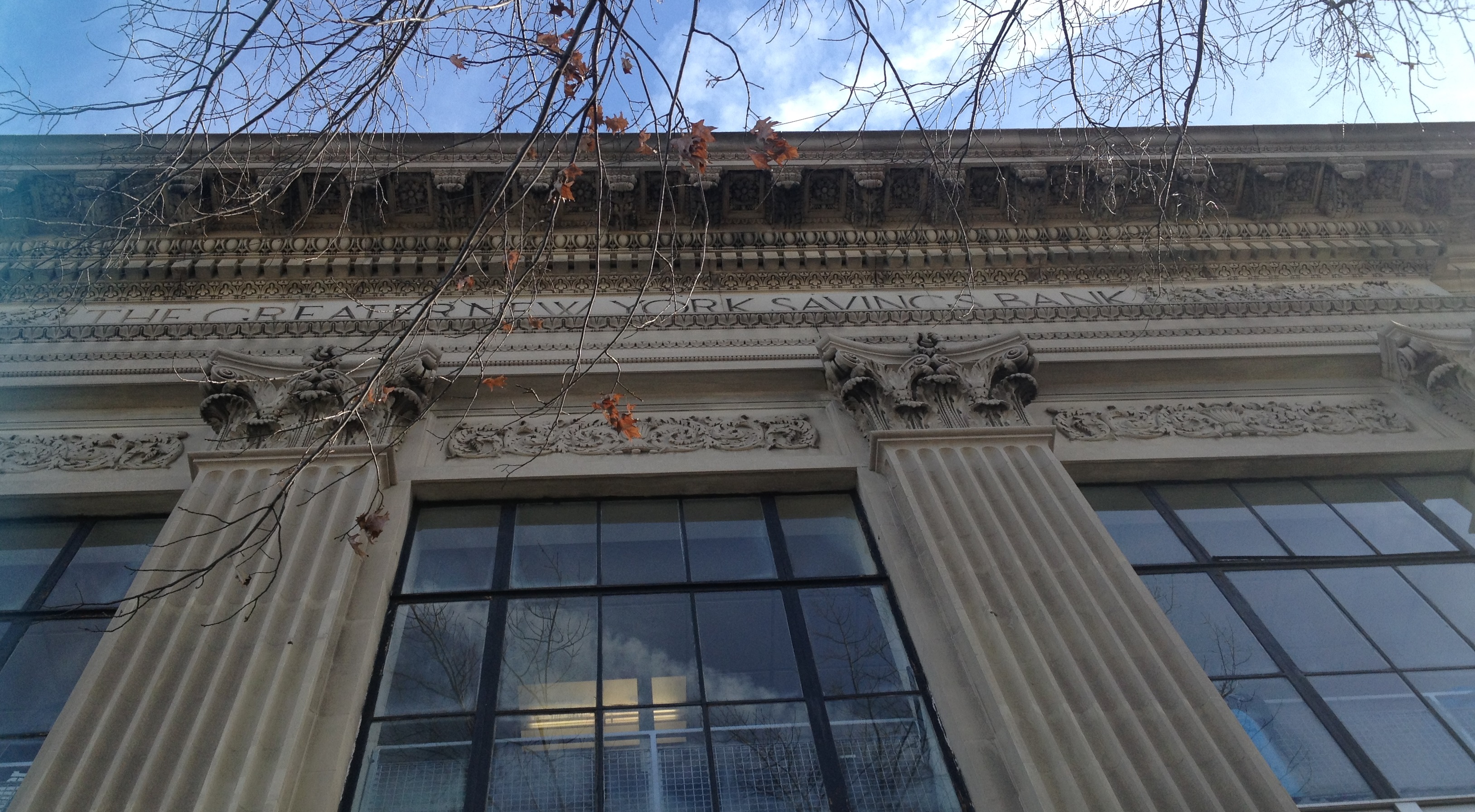
Greater NY Savings BankFinance may be ascendant in NYC, but plenty of once-grand bank buildings are now repurposed as retail stores, fitness centers and (of course) luxury condos.  Here’s a small sample gathered from some recent Brooklyn runs, along with whatever information I was able to dig up about the history of each institution and location.

I like to think that the stories of these buildings, combined, help tell a bigger story about financial consolidation. The plot of that bigger story careens from one financial crisis to the next, with a hot redlining subplot, all set against a backdrop of Brooklyn’s decline as a manufacturing center and growth as a lifestyle brand.

I don’t pretend to do justice to that story here, just to hint at it.

(One acknowledgement that absolutely must go up front: as I was working on this post, I quickly discovered  that Kevin Walsh’s “Forgotten New York” blog has visited most, if not all, of these same sites – and many others as well. If you aren’t already familiar with FNY, and you have even a smidgen of interest in the social, economic and architectural history of Brooklyn and New York City, then you owe it to yourself to check it out.) Continue reading

Rest day – and a look back

IMG_2008

Not quite how I was feeling, eight miles into a run on a muggy September day

No run for me today – and how odd that feels. Easy runs have been an important part of my marathon training, but scheduled “no run” days haven’t. From the beginning of September through the Staten Island Half Marathon on October 12, I  ran every day, averaging 60+ miles a week.

This week, I’ll drop down to 40.  Next week, I’ll drop down even more, and try to stay off my feet as much as possible (meaning no 6-hour birding walks in the park, no matter how many rare sparrows turn up there).

Instead of catching up on my reading, as planned, I’ve been fidgety and unproductive.*

I want to run, dammit.

So I’ve been looking back on my training – the miles run and the sights seen while I ran them.  When I first qualified for the New York City Marathon, I fantasized not just about lining up on the most spectacular starting line in the sport,** but about long training runs that would carry me to the farthest reaches of the city.  I’d take a 1 train to Van Cortlandt Park and run all the way back.  I’d hop on the A to farthest Far Rockway.  I’d finally get to Canarsie and Sheepshead Bay and Rego Park and other neighborhoods well off my beaten running path.

Sometime in late August, I realized that the number of long runs remaining on the calendar was not infinite. It was, in fact, extremely finite – and shrinking. Other running exigencies, such as the desire to avoid busy streets and long lights, worked against my plans to combine marathon training and urban exploration.

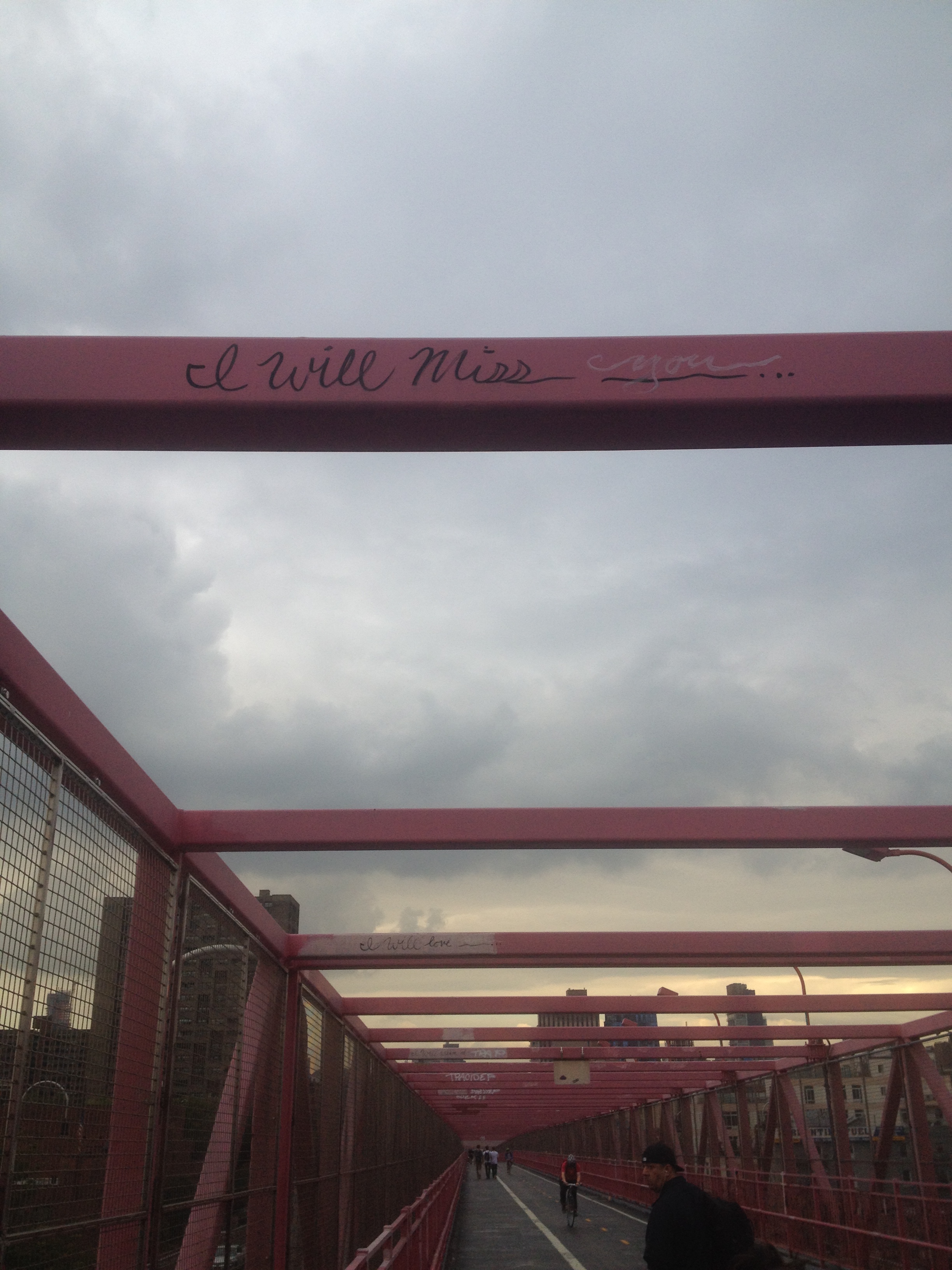
Even so, I managed some memorable runs, and saw some great stuff . . . including these scenes from a run last month that took me along the Brooklyn waterfront from Red Hook to DUMBO and Vinegar Hill, then alongside the Navy Yard into Williamsburg and over the Williamsburg Bridge into Manhattan.

IMG_1992

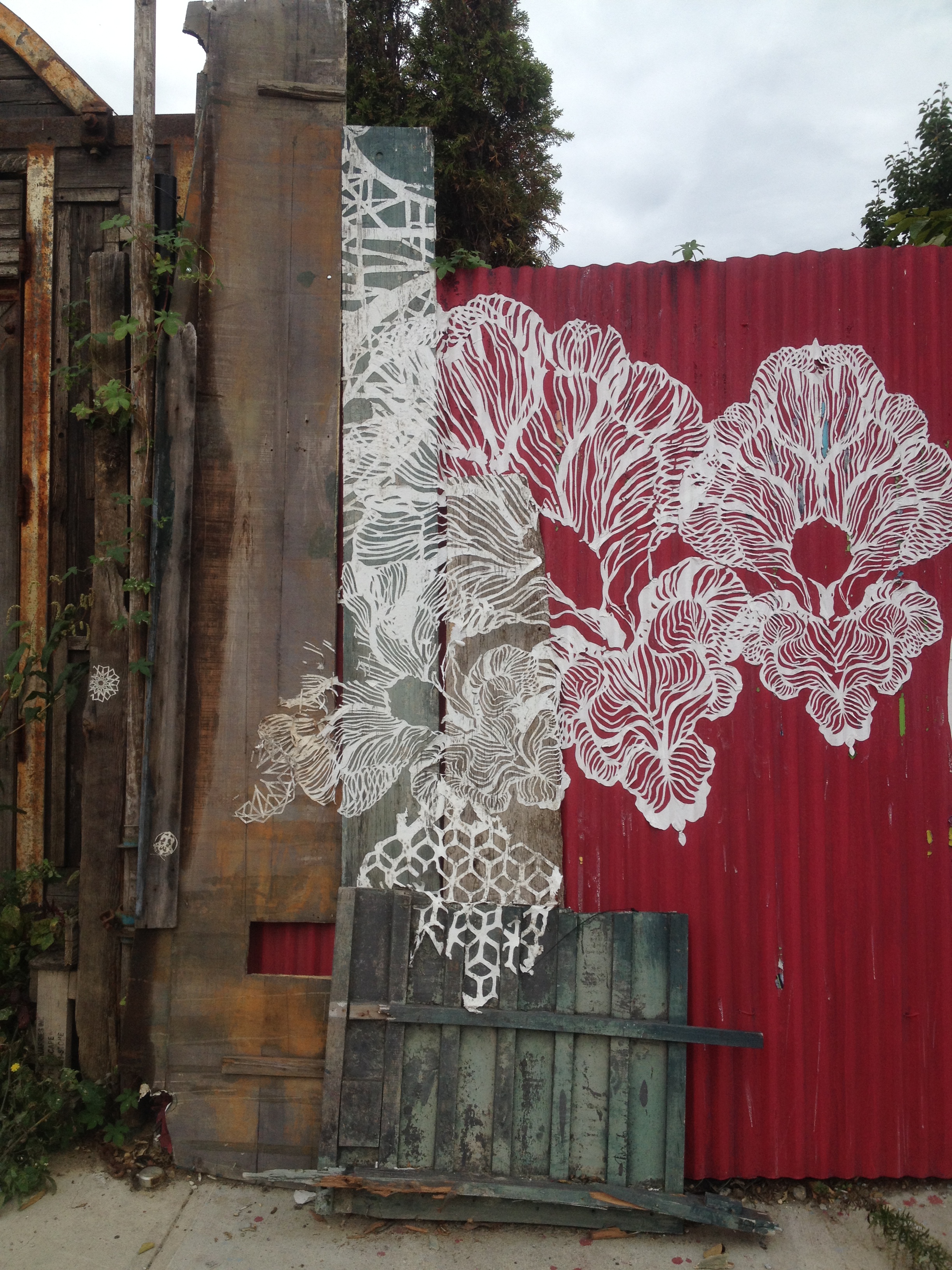
Swoon’s work in Red Hook

IMG_1993

IMG_1998

A Mondrian-esque shed in DUMBO

IMG_1999

No time to sit and enjoy the view – I had miles to do.

IMG_2009

Sure, I’ll run with you!

IMG_2003
And my tired legs
IMG_2016

I’m already missing all of this.

*Though I did manage to do laundry and vacuum.  And Eric and I have been eating very, very well this week.

**As Mary Wittenberg of the New York Road Runners is fond of saying, and I agree.

Westbury Court

IMG_1536 A bit more on yesterday’s lunchtime ramble:

The streets to the west of Flatbush are block-long “courts” dead-ending at the B/Q tracks and lined with apartments and row houses built, with many flourishes, at the turn of the last century.*  I walked down one of them, Westbury Court, to check it out and take pictures.  Back home, looking for more information on the history of the street and its rather grand apartment buildings, I mostly came up empty – but I did learn that the writer Edwidge Danticat lived there for a few years as a teenager and that she used the street’s name as the title of an essay about loss and memory.

I read the essay yesterday afternoon, for the first time.  It tells of a fire, dead children, a shooting, run-of-the-mill burglaries.  While taking pictures and thinking about lunch, I had stumbled into a dense thicket of memory, lives, ghosts.

I wish I’d been less clueless and more reverential, that I’d treated the block as hallowed ground. But, you know, it’s all hallowed ground.  Westbury Court just happens to have an extraordinary storyteller to remind us of that fact.

End of Westbury Court

End of Westbury Court

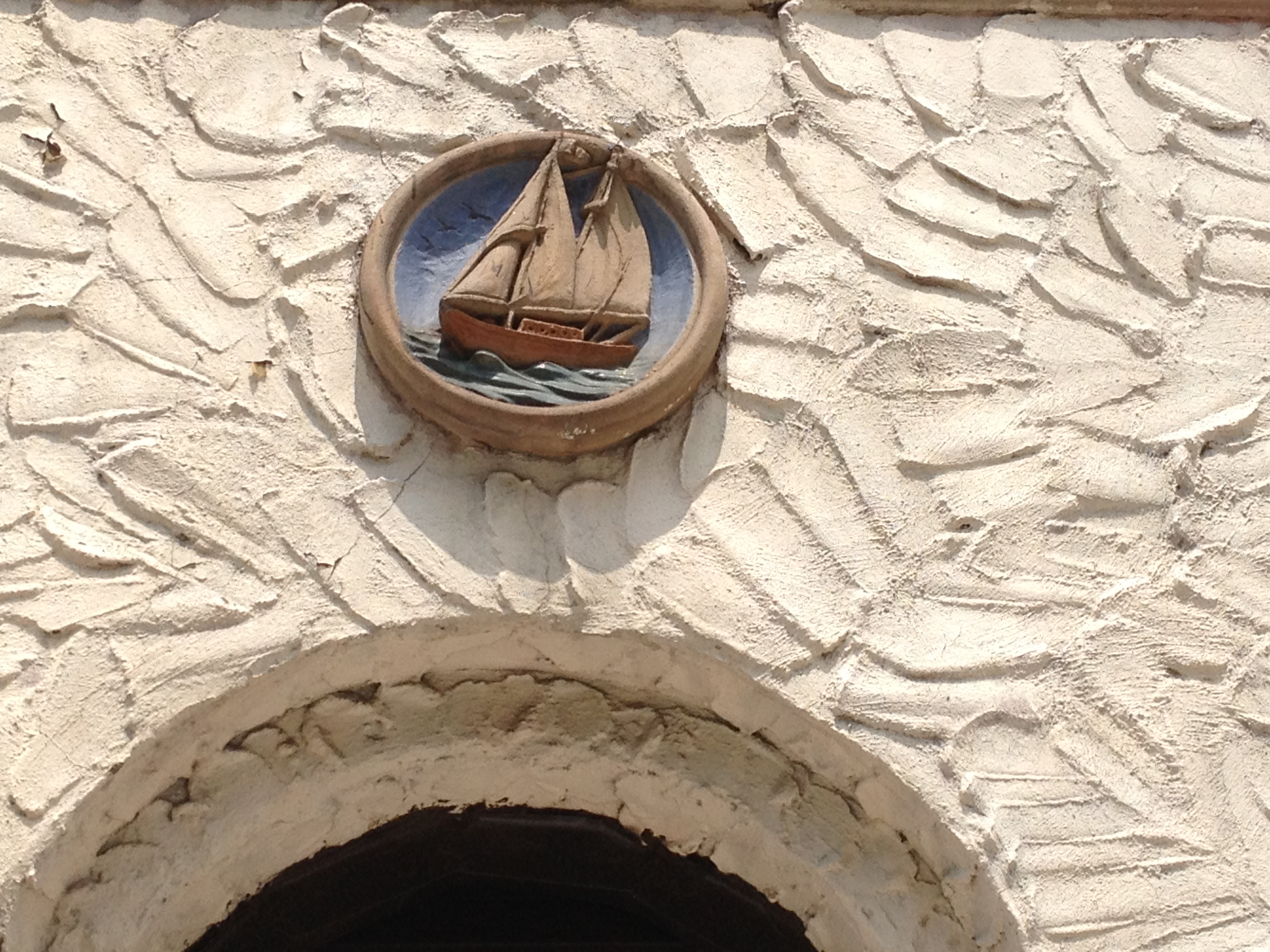
Nautical tile, north side of Westbury Court

Nautical tile, north side of Westbury Court

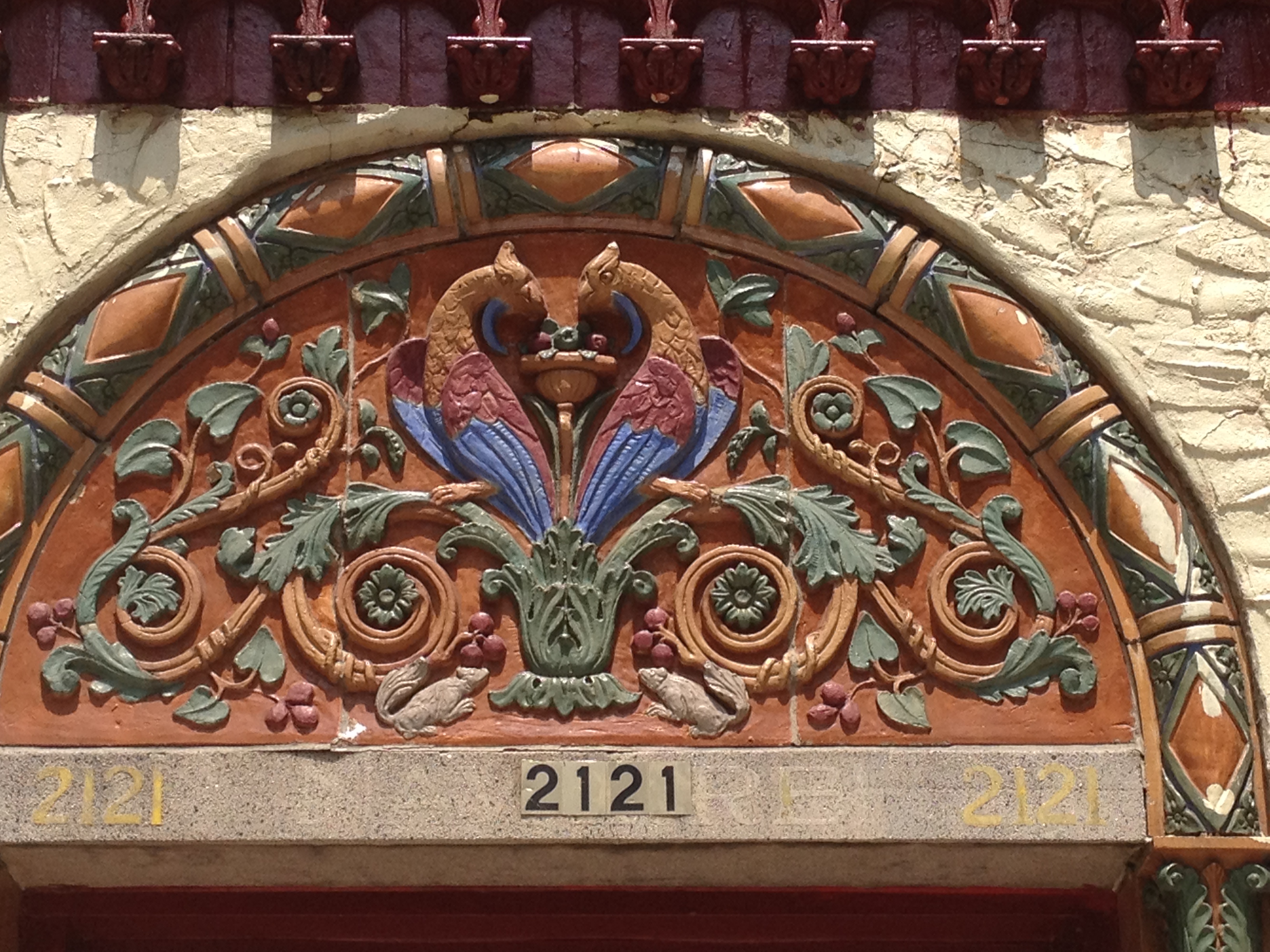
Entry detail, south side of Westbury Court

Entry detail, south side of Westbury Court

*My go-to source in this case being Adrienne Onofri’s Walking Brooklyn.

This time, it’s really coming down

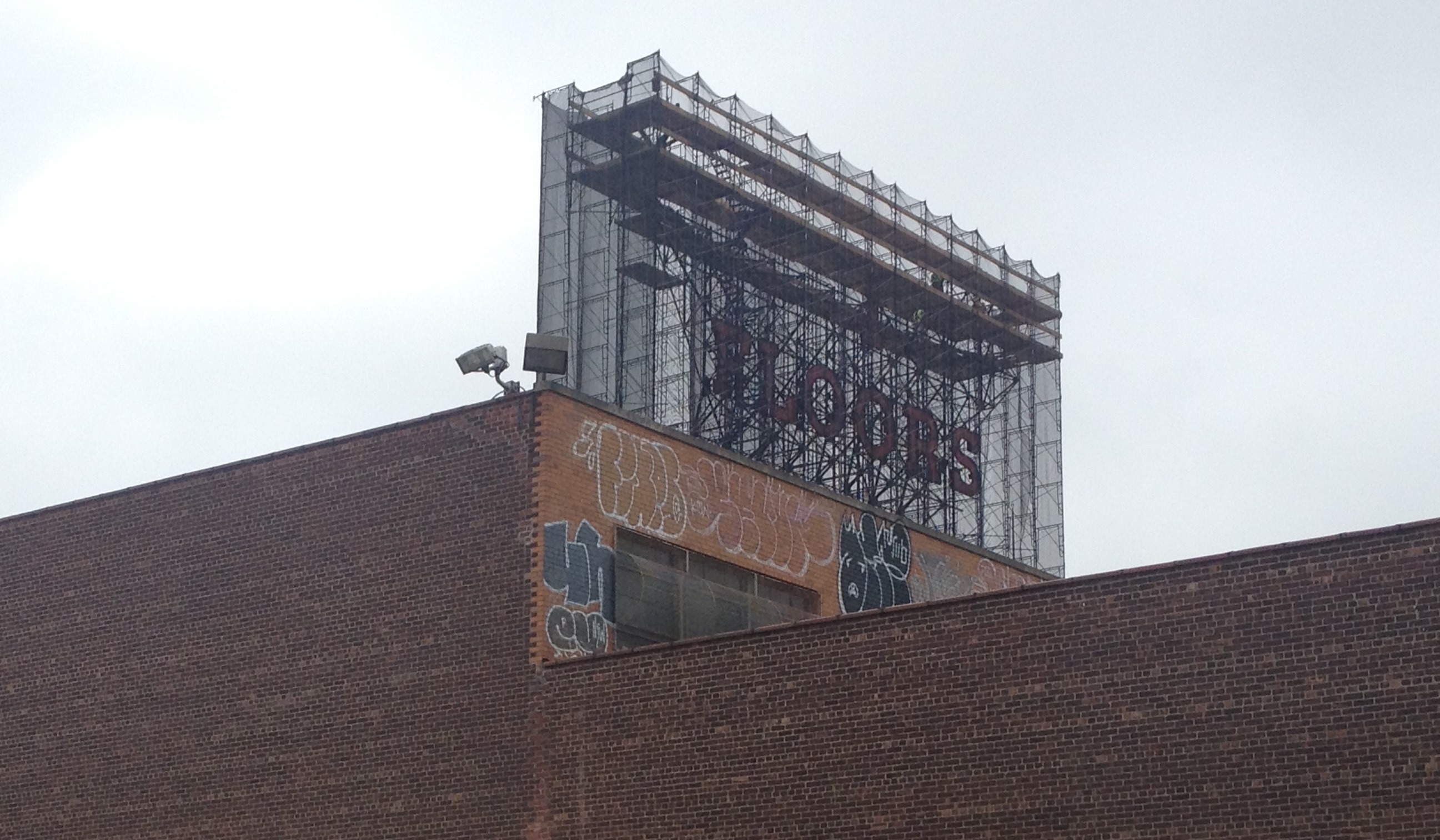
kentile sign demolition 3 crop

The Kentile Floors sign that looms over 9th Street between Second Avenue and the Gowanus Canal also looms large in the imagination of many Brooklyn residents.  It dominates the sweeping view from the F/G train tracks as they climb to the highest point in the New York City subway system.*  It is depicted on expensive  T-shirts sold online and at the Brooklyn Flea.  It has its own Facebook page and is featured in countless Flickr streams.

And now, it’s coming down.

Its demise had been rumored before.  In February 2013, a spate of news stories and blog postings announced that the sign would soon be removed – while another spate of news stories and blog postings denied any such plans.  The sign remained.**

In the intervening period, the Gowanus skyline lost its not-quite-so-iconic-but-still-loved Eagle Clothes sign when U-Haul, expanding its Third Avenue self-storage business, decided that an 80-foot tall advertisement for a defunct manufacturer of men’s suits*** was incompatible with two additional floors of lockers to hold stuff that Brooklynites can’t fit into their apartments.

Then, at the beginning of this month, Kentile Floors rumors started flying again.  More troubling was the fact that this time, the rumors were supported – by scaffolding.  On June 4, Gothamist reported that scaffolding was going up around the sign, and that a permit to remove it had been quietly applied for and granted back in April.****  On June 19, despite appeals by community residents and local politicians, the “K” and “E” came down.  Yesterday morning, when I ran along 9th Street on my way to the Red Hook track, all that remained of “Kentile” was the bottom half of the giant central “T.” I could barely make out two workers on a lift, doing something, slowly.  Removing an 8-story sign is painstaking work.

As the letters come down, they’ve been promised to the nonprofit Gowanus Alliance, which has vowed to safeguard them until they can be reinstalled . . . somewhere.  Somehow.  If they’re not damaged too badly in the removal process.

So that’s where things stand.  I will miss the sign.  Along with Coney Island’s Parachute Jump, the Williamsburg Savings Bank (now converted to luxury condos), and (of course) the Brooklyn Bridge, it was one of a handful of structures that, for me, defined Brooklyn’s skyline.

Inevitably, the spectacle of fashionable young Brooklynites decking themselve out in the logos of closed plants mired in asbestos litigation (or seeking to buy a letter or two to decorate their lofts*****) has inspired a bit of a backlash.  In a provocative piece in the New York TImes a couple of weeks ago, Ginia Bellafante writes:

That we are engineered toward the creation and consumption of easy narratives more than we are moved toward the analysis of complex realities is an argument to which modern politics and life give credence every day. Among urbanists in recent years, for instance, there has been a growing and rather emotional fascination with old corporate signs — mammoth emblems to industries whose output or methods of production are (or were) anathema to a prevailing value system that holds in relentless contempt anything processed, chemically supplemented, bought in a chain store or intended for ingestion more than 11 minutes after harvest.

She concludes by challenging the “nostalgists” (her term) to focus on improving the lives of real, current, working-class New Yorkers.

It’s an important challenge, and she’s absolutely right that nostalgia is not a political analysis, and certainly not a political program.  It can be a cheap and easy emotion.

And yet . . . nostalgia can also stir up deeper emotional attachments – the kind that, if you’re at all inclined in that direction, motivate and deepen activism.  For me, in addition to the coolness of its mid-century design, the Kentile Floors sign evokes memories of my grandfather, who had a small floor-covering business with his brother in Toledo and, later, Perrysburg, Ohio.  They may or may not have carried Kentile products (they were more into a competing line, Congoleum, manufactured in Kearny, New Jersey), but there’s something oddly satisfying in thinking about trucks? rail cars? loaded with sheets of flooring making their way from Gowanus to Midwestern warehouses to the kitchen floors of Toledoans.

From there, if you have a modicum of curiosity about such things, it’s just a hop, skip and a jump from nostalgia to an investigation of working-class history that raises discomfiting questions that just might – who knows – deepen our understanding of the present NYC economy.

The first thing that struck me when I started looking into Kentile’s history was how shockingly little information is available about the workers who made its products.  How many people lost their jobs when the plant closed in the late 1980s?  (It’s telling that I couldn’t even pin down the exact year of the closing.)  What happened to them?  What was it like to work there, and what were workers’ lives like?  How many were cut short by asbestos-related lung diseases?  I mostly came up empty.

Except . . . in the course of my on-line search, I did stumble on a comment from a former worker, “Hank Rich” (I have no idea if that is his real name), responding to a post about the Kentile Floors sign on the Fading Ad blog some years back.

Here’s his February 2009 comment, reproduced verbatim:

I worked at the Kentile plant by the Gowanis Cannal in 1952, 53 and 54 as a piping/mechanical draftsman developing piping systems for manufacturing floor tile . Moved to Colorado in 55, but miss the smell of the old canal and the likes of Ramundo, Awan, Lupo, Jerry Johnson and the sound of the machinery stamping out the tiles, mostly asphalt, but we were working on cork tile at the time. Good days, but, sadly, gone forever.

The fact that Hank remembered the names of his (all male, it would seem) co-workers more than 50 years later speaks to the role work plays in our lives and the strength of the bonds we form on the job.  From now on, when I look at what’s left of the Kentile Floors sign (or, soon, at the empty space it used to occupy), I’ll be thinking of Hank, Ramundo, Awan, Lupo and Jerry – and of their children and grandchildren (literal and figurative, daughters and granddaughters as well as sons and grandsons) who deserve good jobs in this new Brooklyn landcape.

Nostalgia doesn’t provide answers, but to the extent it raises questions, that’s a start.


*Such is its appeal that riders have been known to glance up from their smartphones during those few precious minutes of connectivity between the Carroll Street and Fourth Avenue stations just to admire it.

**My honeymoon was in February 2013, and while I wouldn’t go so far as to say the rumors cast a pall over our two weeks in Trinidad and Tobago, I was very, very happy and relieved to find the sign still there when we returned.  Such is the ridiculous fondness it inspires.

***Eric says he used to own one of their suits.  If so (and I have no reason to doubt him), I wouldn’t be surprised if it’s still in our closet somewhere.

****In his excellent blog, The Weekly Nabe, my running friend Keith Williams recounts his trek to the Department of Buildings to research the permit.

*****Can’t locate a link, but that was the reaction of one Facebook poster on learning of the planned removal of the Kentile Floors sign. Not kidding.